

Every home care business lives or dies on one thing: clients. You can have the best caregivers in town, but if no one knows you exist, none of it matters. So before we talk about anything else, let's talk about the very first step: finding the people who need your services. Here's the good news. Once you know where to look and who to look for, potential clients start showing up almost everywhere you go.
The need is big and growing fast
If you ever wonder whether there's enough demand to build a business on, the numbers should put you at ease. Today there are about 61 million Americans age 65 and older, roughly one in every six people in the country. And that group is growing faster than almost any other. Between 2010 and 2020, the 65-and-older population jumped by nearly 39 percent, the fastest growth of its kind since the 1800s.
It's not slowing down, either. By 2040, the number of older Americans is expected to reach around 80 million, about one in five people in the country. On top of that, the 85-and-older group, the folks most likely to need daily help, is projected to more than double.
Here's the part that matters most for you. Someone turning 65 today has about a 70 percent chance of needing some form of long-term care in their lifetime, and more than half of older adults will need ongoing support at some point. Better still, when people are asked how they want to receive that care, roughly 80 to 90 percent say they'd rather stay in their own home than move into a facility. That preference is exactly what your business provides. Around 12 million Americans already receive care at home, and every year that number climbs.
In plain terms: the pool of people who need what you offer is enormous, it's getting bigger every single year, and most of them would prefer care at home. Your job is simply to find them, which brings us to where to look.
Where should you market?
The first question most new agency owners ask is simple: where do I even start? The answer is to go where your future clients already spend their time. Elderly adults, and adults and children with special needs, tend to pass through the same kinds of places over and over.
Start with these four: hospitals, clinics, rehabilitation centers, and senior apartment complexes. These are places where people who need care are already gathered, already thinking about their health, and often already looking for help getting through daily life. A caregiver being discharged from a rehab center, or a family visiting a loved one in a senior complex, is exactly the kind of person who needs to hear about you.
You don't have to cover all four at once. Pick one or two that are close to you, get comfortable talking to people there, and build from there. Consistency in a few good spots beats spreading yourself thin across the whole city.
Who are you actually looking for?
Not everyone you meet will be a fit, so it helps to know the signs. The clients you're marketing to are usually people who may have Medicaid or SSI disability benefits. You often can't tell that from across the room, but you can watch for the everyday clues that someone might qualify.
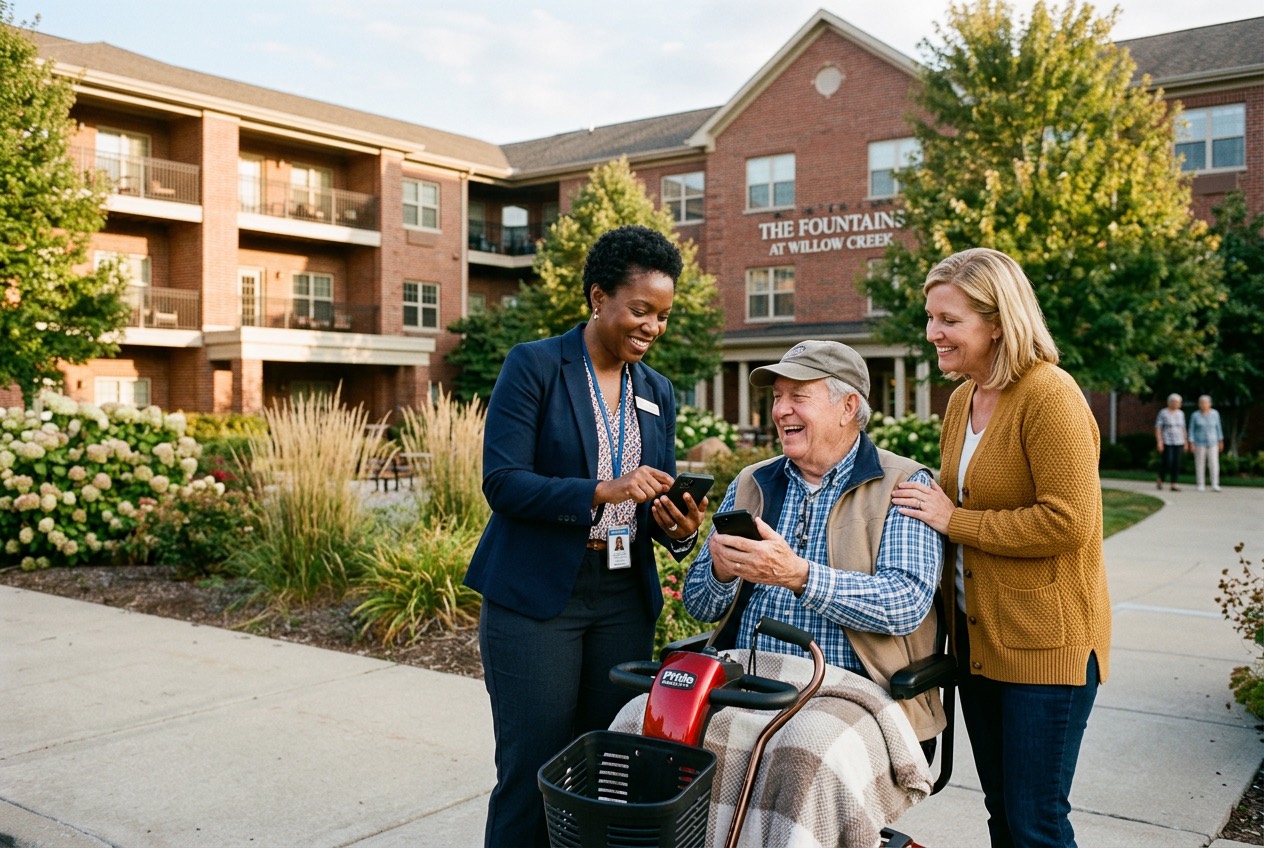
Whenever you meet someone who is aged, or who has a visible disability, pay attention. That might be a person who is visually impaired, someone who is an amputee, or someone getting around in a motorized scooter. These are the kinds of situations that often point to someone who could qualify for Medicaid services. You're not diagnosing anyone or making assumptions about their life. You're simply recognizing that they may be eligible for help they don't know is available.
What to do the moment you find someone
This is where a lot of new marketers freeze up. You've met someone who seems like a good fit. Now what? Keep it simple. The single best thing you can do is get their name and their telephone number. That's it. You don't need to sign them up on the spot or explain every detail of how home care works. You just need a way to follow up.
Be honest about the timeline. Let them know up front that there is a process, and that in a perfect world it may take four to six weeks for them to be qualified through the Medicaid waiver programs (such as SOURCE or the CCSP program). Setting that expectation early does two things: it keeps them from getting discouraged when it doesn't happen overnight, and it makes you look like someone who knows what they're doing. People trust the person who tells them the truth about the wait.
Write the name and number down somewhere you won't lose it, and follow up when you say you will. Half of this business is just being the person who actually called back.
Don't forget private pay clients
Here's something a lot of new owners miss: Medicaid clients are not the only people you should be looking for. You should also be seeking out private pay clients, the folks who pay for care directly rather than through a government program.
The big advantage with private pay is speed. There's no wait time on signing up a private pay client. No four-to-six-week qualification process, no waivers to approve. If they want care and can afford it, you can often start right away.
It's worth keeping in mind that these are usually two different groups of people. In most cases, someone who can comfortably afford to pay privately will not qualify for Medicaid (their income is too high). So think of private pay and Medicaid as two separate lanes for growing your business, not one. The healthiest agencies keep a mix of both: Medicaid clients for steady, ongoing volume, and private pay clients for the cash flow you can turn on quickly.
The bottom line
Finding clients isn't complicated. It just takes showing up in the right places and knowing what you're looking at. Go where the elderly and people with disabilities already are. Watch for the everyday signs that someone might qualify. When you meet a good fit, get their name and number, be straight with them about the timeline, and follow up. And keep an eye out for private pay clients along the way, because they can start right now.
Do this consistently for a few weeks and you'll be surprised how quickly your list of prospects grows. This is Step 1 for a reason: everything else in your home care business is built on top of it.
Step 2 of this series is coming soon. Subscribe below and it will land straight in your inbox.
Population and long-term care figures: U.S. Census Bureau and Population Reference Bureau (aging population projections); U.S. Department of Health & Human Services / ACL (long-term care need); industry home care statistics summaries (2025 to 2026).